


Cart
0
Tomato Bio-Leather vs Traditional Leather: What You Should Know Before Buying
What Exactly Is Tomato Bio-Leather?
Tomato bio-leather is one of the latest entries in the world of synthetic and plant-based leathers. It’s made from tomato peels, pulp, and leftover fibers from food production. These are processed, dried, and mixed with plant-based resins to form flexible sheets that mimic animal hide.
There’s no denying that the concept is interesting.
It’s innovative, eco-friendly in theory, and part of a broader effort to reduce waste. But despite the promise, it’s still very new — more of a lab-grown experiment than a proven alternative for everyday, long-lasting goods like laptop bags or duffles.
So while tomato leather might work well for lightweight accessories or fashion pieces, it falls short on durability, texture, and endurance when compared to real leather.
The Proven Legacy of Traditional Buffalo Leather
Long before the world started experimenting with “vegan” or “bio” materials, buffalo leather had already stood the test of time. It’s been used in travel gear, office accessories, and heritage designs for generations because it naturally offers what these new materials are still trying to achieve — strength, flexibility, longevity, and timeless appeal.
At Hestern, we use full-grain buffalo hide, the finest layer of the leather that retains its natural grain and fiber density — for which you can check out this bag - Heritage Buffalo Pure Leather Laptop Bag. This gives our bags unmatched resilience while allowing them to age beautifully with a natural patina.
Every crease and color variation tells its own story — something no lab-made material can replicate.
Our approach to sustainability is not about replacing leather with synthetics; it’s about making better, longer-lasting leather goods that reduce waste over time.

Why “New Leather Alternatives” Are Everywhere
Walk into any store today and you’ll see all kinds of materials being sold as “next-generation leather.”
From cactus leather to mushroom leather, and even tomato leather, brands are racing to create sustainable, animal-free materials that look and feel like the real thing.
But let’s be honest — not all that glitters is gold.
While these plant-based leathers are clever innovations, they still struggle to match the richness, strength, and character of genuine buffalo leather.
At Hestern, we’ve spent years perfecting the craft of full-grain buffalo leather bags — and when you put these new materials side by side, the difference is immediately clear.
Tomato Leather vs Buffalo Leather: The Core Differences
Here’s a clear look at how both materials perform where it really matters.
| Attribute | Tomato Bio-Leather | Buffalo Leather |
|---|---|---|
| Source | Made from tomato waste and plant binders | Natural hide from ethically sourced buffalo |
| Durability | Soft, flexible, but less resistant to abrasion | Extremely strong; lasts for years |
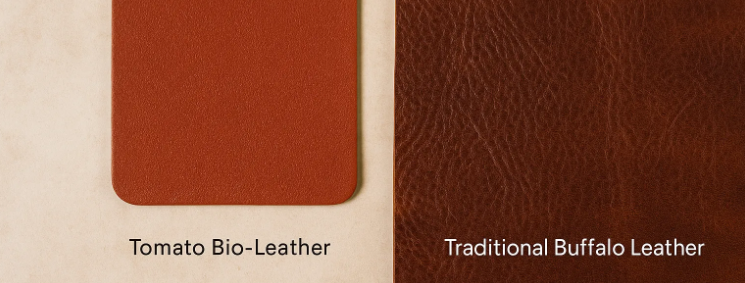
| Texture | Smooth and even | Deep grain, natural feel |
| Aging | No change over time | Develops patina and softness |
| Maintenance | Low upkeep | Requires conditioning and care |
| Eco Impact | Made from waste; fully vegan | By-product of meat industry; long lifespan |
| Use Case | Light accessories, experimental fashion | Office, travel, and daily-use bags |
Performance and Feel in Real Life
A material can look sustainable on paper, but performance defines its real worth. Tomato leather feels lightweight and pliable, making it suitable for wallets, pouches, and experimental designs.
Buffalo leather, however, is built for endurance. It handles daily wear, weight, and weather changes effortlessly. Over time, it softens without losing structure — something plant-based alternatives still struggle to replicate.
When you touch a buffalo leather bag, you feel warmth, weight, and depth. When you touch a tomato leather product, you feel smoothness but little life. One grows with you, the other stays static
Is Tomato Leather Really Sustainable?
It’s easy to call something “eco-friendly,” but true sustainability considers the entire lifecycle.
Tomato leather uses plant waste and fewer chemicals, which is great. But because it doesn’t last as long, it may need replacing more often — creating more consumption.
Buffalo leather, when responsibly sourced and maintained, can last decades. A single bag replaces a dozen synthetic ones. In the long run, that’s a quieter, steadier kind of sustainability — the kind we believe in at Hestern.
Care Tips for Both Materials
Tomato Bio-Leather
- Clean gently with a soft, dry cloth
- Avoid prolonged sunlight or friction
- Keep away from water and sharp edges
Buffalo Leather
- Use a pH-balanced leather cleaner monthly
- Condition every 3–4 months to maintain oils
- Store in breathable cotton or canvas covers
- Avoid plastic wraps or excessive heat
When Tomato Leather Makes Sense
If you’re buying a light-use accessory, want to experiment with vegan materials, or simply love the story behind it — tomato leather can be a fun choice.
It’s innovative, visually appealing, and a testament to how creative the fashion industry has become in reducing waste.
But if you’re looking for a reliable bag for everyday use, travel, or gifting, buffalo leather still stands unmatched like **Voyager Premium Leather Laptop Bag.**

FAQs
Q1. What is tomato bio-leather made from?
A: It’s made from tomato peels, pulp, and natural binders — all derived from industrial tomato waste.
Q2. Is tomato leather available in India?
A: It’s still a niche innovation, available mostly through small-scale designers and research labs.
Q3. Which lasts longer: tomato leather or buffalo leather?
A: Buffalo leather lasts several years or even decades. Tomato leather is less durable and more experimental.
Q4. Is buffalo leather eco-friendly?
A: Yes, when sourced ethically. Hestern uses buffalo hides that are a by-product of the meat industry, reducing waste and promoting longevity.
Q5. What does buffalo leather feel like compared to tomato leather?
A: Buffalo leather feels textured, warm, and natural. Tomato leather feels smoother and lighter, but less organic.
Final Thoughts
Tomato leather proves that innovation and sustainability can co-exist. It’s a promising step toward circular design, showing how creativity can turn waste into wonder.
But traditional buffalo leather remains a class of its own — durable, authentic, and timeless. It’s the material of choice for people who see leather not as a fashion statement, but as a lifelong companion.
At Hestern, we celebrate that legacy. Each bag we craft is built to last, to carry your stories, and to age beautifully with you.
Experience the real difference today: Shop Hestern Leather Bags


