


Cart
0
Genuine vs. PU Leather Bags: What You Should Know Before You Buy
If you’ve been scrolling through endless “leather bag” listings online, chances are you’ve seen prices that seem too good to be true. Some of those so-called leather bags are made of synthetic PU material that looks like leather on day one but starts cracking and peeling in a matter of months.
It is easy to be misled by marketing words like “genuine leather,” “vegan leather,” or “faux leather finish.” But understanding what these materials really are helps you make a smarter choice before you spend your money.
The Short Answer
If you are looking for a bag that lasts, softens with time, and develops a beautiful patina, choose real leather — ideally full-grain or top-grain. PU leather can work for those on a short budget or for short-term use, but in India’s humid weather, it will rarely stand the test of time. Knowing the difference between Genuine and PU Leather Bags is the difference between a bag that lasts for years and one that lasts a single season.
What “Genuine” Leather Actually Means
The term genuine leather simply means the product is made from animal hide, but it does not guarantee top quality. The real quality depends on which layer of the hide is used.
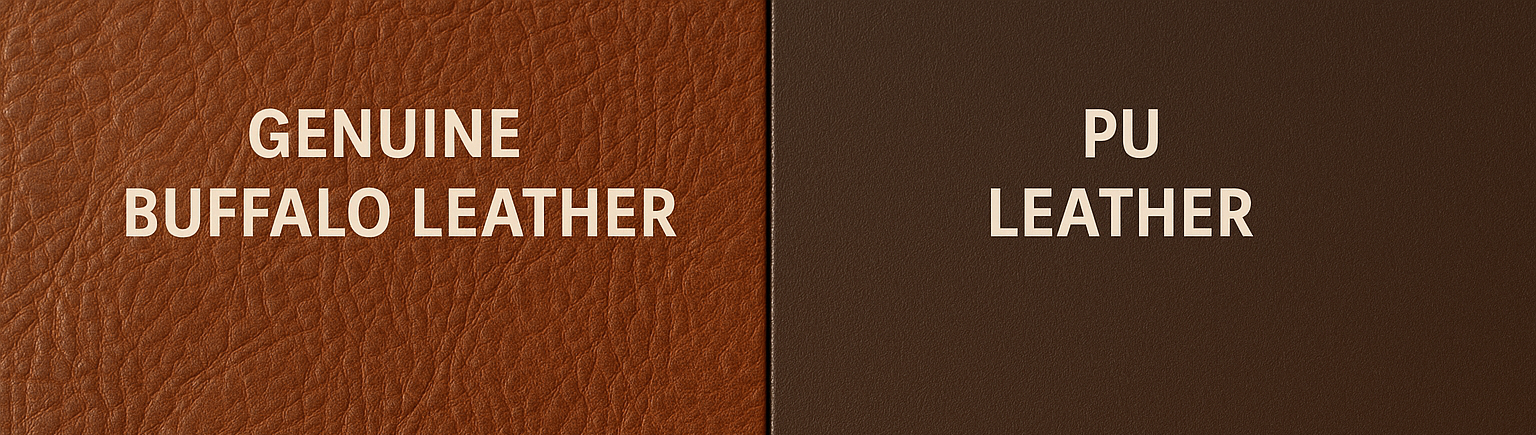
Full-grain leather is the strongest and most natural form, with the uppermost layer of hide preserved. It keeps its grain, its tiny imperfections, and its natural oils. This is the kind of leather that matures beautifully over time.
Top-grain leather is slightly buffed or sanded to remove imperfections but still retains strength and durability.
Split leather comes from the lower layers of hide, often coated or embossed to imitate texture. It may technically be “genuine leather,” but it is far less durable.
That is why brands that mention “genuine leather” without specifying the grade are often using the term loosely. At Hestern , we are transparent about the material like our Heritage Buffalo Pure Leather Laptop Bag. Each piece is made from authentic buffalo leather, chosen for its thickness, character, and durability.
What PU Leather Is Made Of
PU stands for polyurethane. PU leather is made by applying a plastic coating to a base layer of fabric or split leather to imitate the look and feel of real leather.
It looks polished at first, but because it lacks the natural fibre structure of animal hide, it tends to break down faster. When exposed to humidity, sunlight, or friction, the coating begins to peel or crack.
PVC leather is another variation you’ll see in the market. It feels stiffer, has a shinier surface, and often lacks breathability. PU feels softer and closer to real leather but still cannot match its longevity.
Genuine Leather vs PU Leather: The Key Differences
| Feature | Genuine Leather | PU Leather |
|---|---|---|
| Texture | Natural, soft, slightly uneven | Uniform, often too smooth |
| Durability | Can last 5–10 years or more with care | May start peeling within 1–3 years |
| Breathability | Allows air to pass through | Traps heat and moisture |
| Smell | Mild, earthy, natural scent | Synthetic or chemical odour |
| Aging | Develops a rich patina with time | No aging, often just cracks |
| Maintenance | Can be cleaned and conditioned | Harder to repair once damaged |
| Value | Higher upfront cost, lasts longer | Cheaper initially, but short lifespan |
When you carry a genuine leather bag daily, the surface evolves with your lifestyle. PU bags, on the other hand, tend to age quickly and lose their original finish, especially in India’s tropical climate.
How Long Each Material Lasts
Full-grain leather has dense fibres that resist wear and tear. A well-crafted leather bag can last for decades if it’s cleaned and conditioned regularly. PU leather lacks those natural fibres, so once its top layer cracks, there is little you can do to fix it.
In other words, real leather improves with age while PU deteriorates with time.

Comfort in Daily Use
Comfort goes beyond aesthetics. Real leather is breathable, which means it stays comfortable during long commutes or hot days. It also develops softness with use, adapting to your movements and your routine. PU leather traps heat and can feel sticky in warm weather.
The difference is noticeable the moment you touch it. Real leather feels warm and alive, while PU often feels cold and flat.
Performance in Indian Weather
India’s weather tests every material. In monsoon months, full-grain leather holds up well if wiped dry and treated with a waterproofing spray. PU leather initially resists splashes but tends to peel once humidity and heat set in.
If you live in a coastal or humid city, real leather is far more forgiving. It can be restored, conditioned, and repaired. PU cannot.
Sustainability Perspective
There’s a common misconception that PU is always the eco-friendly choice. While PU avoids animal hide, it is petroleum-based and non-biodegradable. Its shorter life also means more waste.
Real leather, when ethically sourced and tanned in responsible facilities, uses the hide that would otherwise go to waste from the meat industry. It lasts for years and can even be reconditioned or passed down. At Hestern, our leather is sourced from certified tanneries that follow ethical and sustainable practices.
7 Simple Tests to Spot Real Leather
- Touch: Real leather feels soft and slightly textured. PU is smooth and cold.
- Smell: Real leather has a natural, earthy scent. PU smells synthetic.
- Grain: Look closely. Real leather has natural imperfections; PU patterns repeat.
- Edges: Genuine leather edges appear rough and fibrous, while PU is perfectly smooth.
- Flex Test: Bend the surface. Real leather wrinkles slightly; PU creases sharply.
- Price Check: If it looks luxurious but costs less than a pair of jeans, it’s likely synthetic.
- Brand Transparency: Genuine brands clearly mention “full-grain” or “buffalo leather” in descriptions.
Care and Maintenance
For Genuine Leather
- Wipe away dust with a soft, dry cloth.
- Use a mild cleaner once a month.
- Apply leather conditioner every few months to keep the hide supple.
- Before monsoon, treat your bag with a waterproofing spray.
- Store in a cool, dry place with tissue or paper inside to hold its shape.
For PU Leather
- Clean with a damp microfiber cloth and gentle soap.
- Keep away from heat sources and sunlight.
- Never store damp; always air-dry before putting it away.
Good maintenance ensures longevity for both types, but leather truly rewards the care you give it.
Why Real Leather Costs More (And Why It’s Worth It)
High-quality leather takes time to tan, treat, and finish. It requires skilled craftsmanship, proper hardware, and detailed stitching. That’s why genuine leather bags often cost more upfront. But because they last for years, they offer better value over time.
A low-priced “leather” bag that flakes after six months costs more in the long run. As the saying goes, buy once and carry forever.
When PU Leather Works — And When It Doesn’t
PU leather is fine for light, occasional use or for those who prefer not to use animal products. It works well for fashion pieces you don’t plan to use daily.
However, for travel, office, or everyday bags, it simply cannot match the endurance, feel, or natural charm of full-grain leather. If you carry a laptop, commute daily, or travel often, real leather is the smart choice.
FAQs
Q1. Is genuine leather always better than PU?
A: Only when it’s high-grade full-grain or top-grain leather. Low-grade split leather with coating can behave almost like PU.
Q2. How long will PU last in humid Indian weather?
A: Usually one to three years, depending on exposure and quality.
Q3. Does real leather require high maintenance?
A: Not really. Just clean and condition occasionally, and it will age beautifully.
Q4. What does real leather smell like?
A: It has a rich, warm, earthy scent. PU often smells artificial or chemical.
Q5. Can I waterproof real leather?
A: Yes. Use a leather-safe waterproof spray and always dry your bag naturally after rain.
Q6. Does heavier leather mean better quality?
A: Generally yes. Thicker hides are denser and more durable, though weight also depends on bag design.
Final Take
If you want a bag that tells a story, choose genuine leather. It’s a living material that softens, darkens, and grows character with time. PU leather may look similar at first, but it is temporary — more fashion than investment.
At Hestern, we believe in crafting products that age gracefully and carry memories as well as essentials. Our bestseller Hestern Duffle bags are made from ethically sourced buffalo leather, designed to last and built for life.
Explore our collections of Leather Bags for Men and Leather Bags for Women to experience the difference yourself.


